Overview
This project was completed in partnership between Northwestern EDI and Southwest Airlines.
Flight disruptions happen daily and leave travelers frustrated and confused, often waiting in long lines for help. These moments create heavy strain for both travelers and agents.
Our team set out to reimagine this experience through Snow, an AI concierge that guides travelers through rebooking and support—without waiting in line.
My Roles
Design Lead: Interaction design, User Flows, Rapid Prototyping
Research Partner: On-site interviews, Evaluative testing, Synthesis
The Problem

The Opportunity
Research
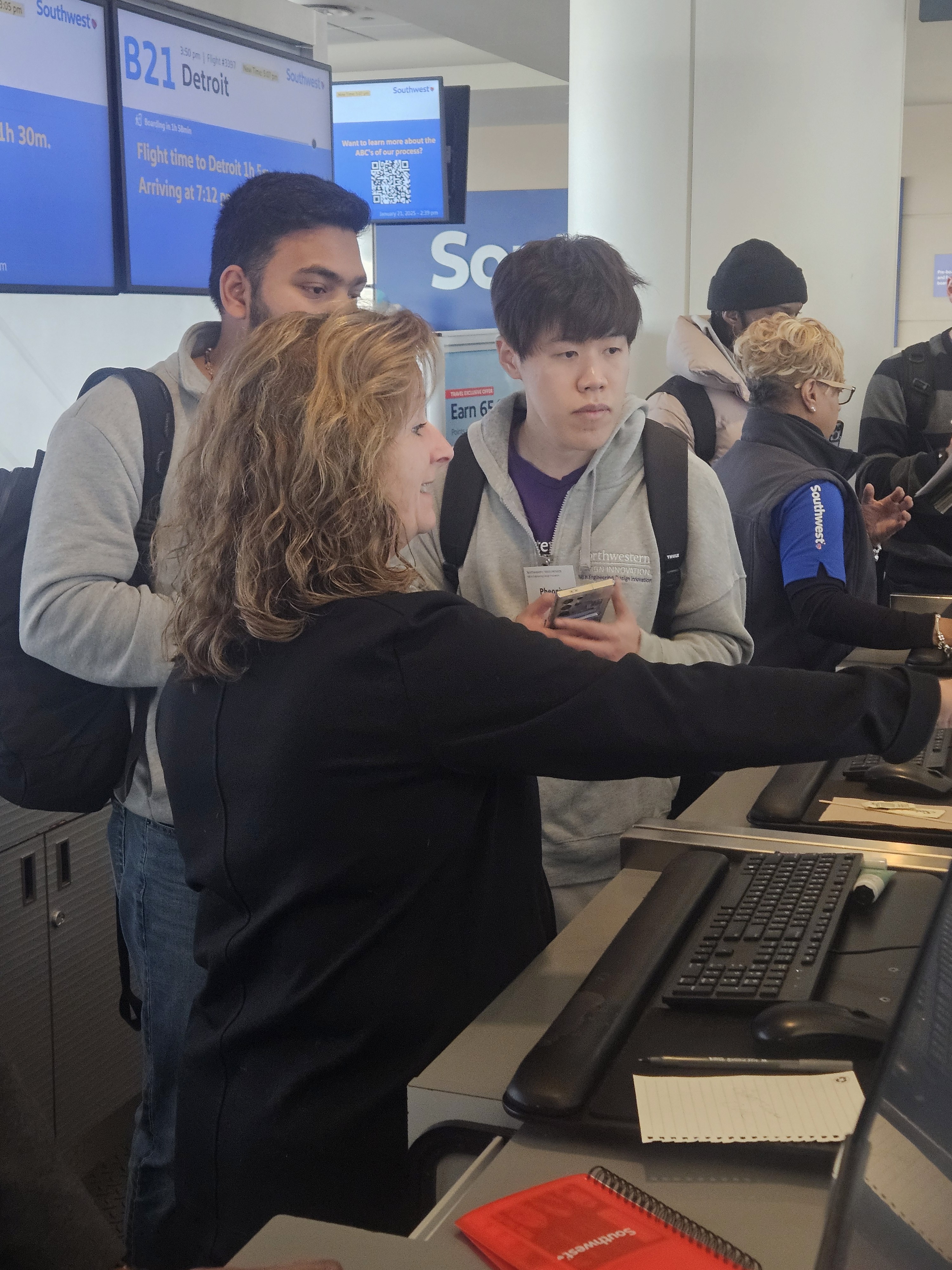
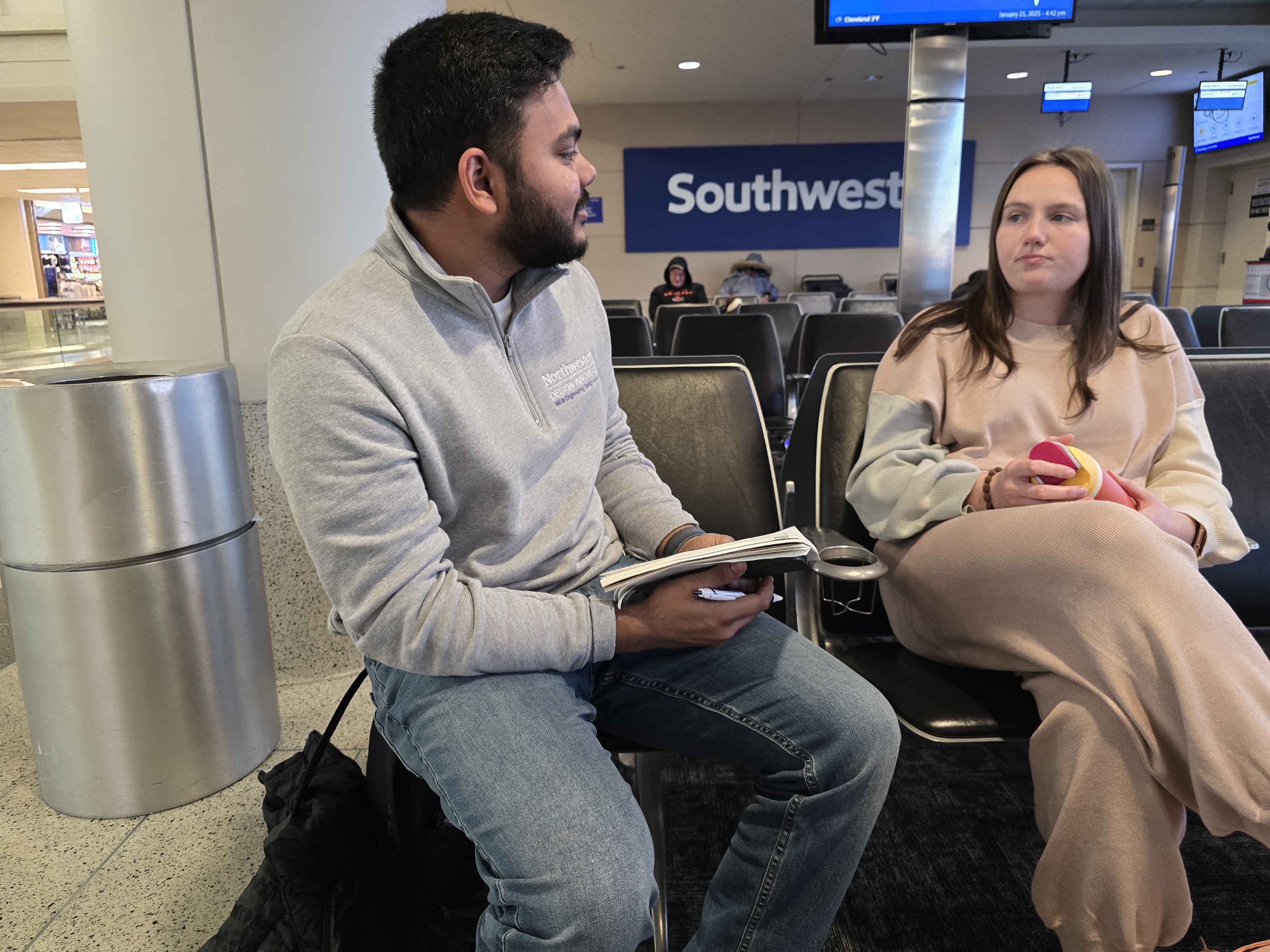
Rebooking flights emerged as the biggest challenge for both travelers and agents. When we dug deeper, two issues consistently explained why the process breaks down.
This led us to wonder…
HMW help agents quickly grasp traveler needs so they can assist more efficiently?
HMW make waiting for in-person assistance feel smoother and less stressful?



Journey Map
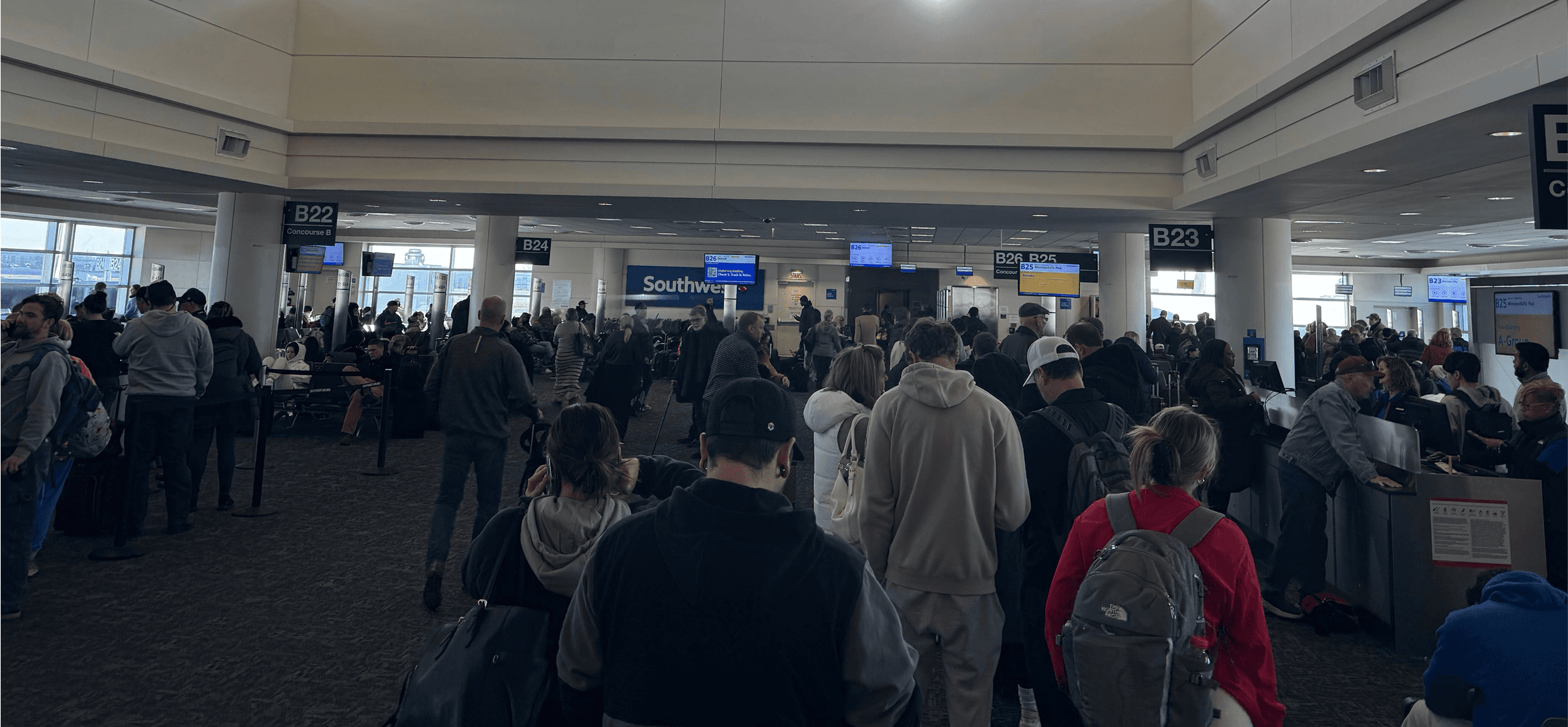
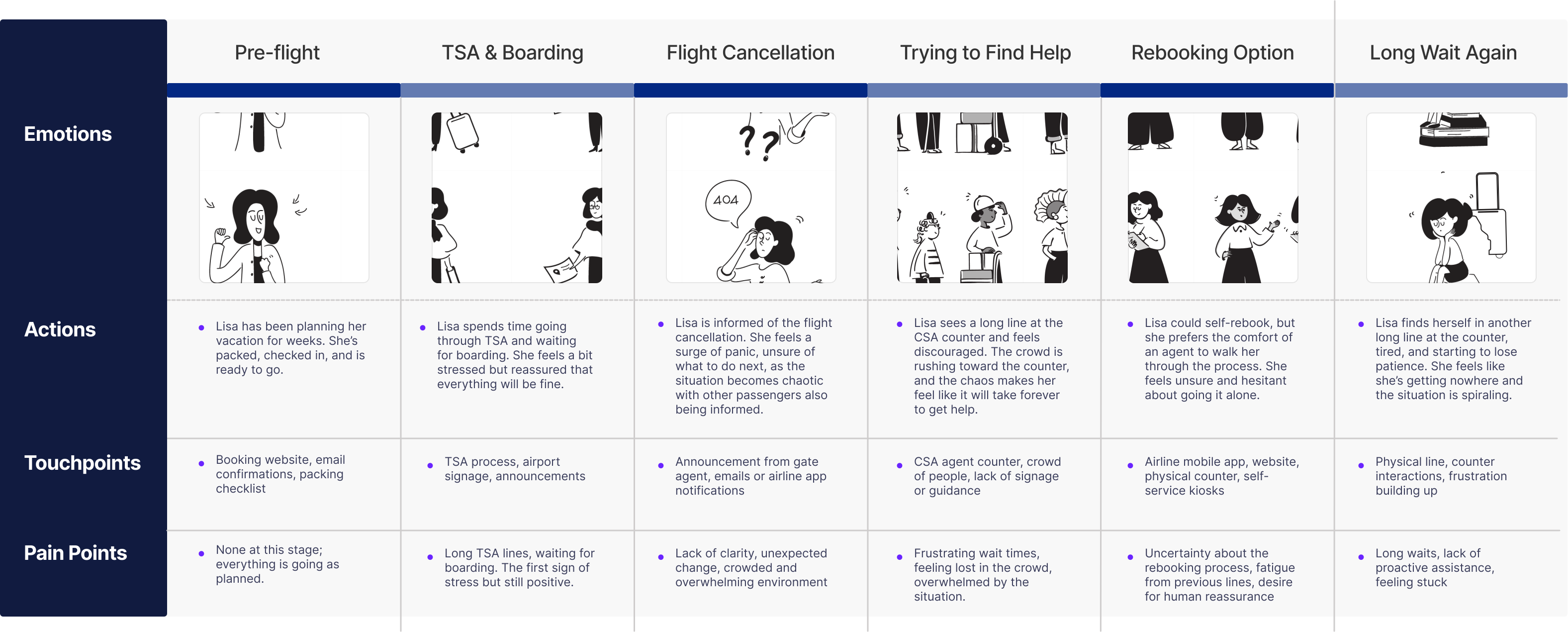
We mapped the end-to-end travel journey and found that travelers spend an unexpected amount of time waiting — from TSA to boarding to getting help during cancellations. These waits intensify stress right when travelers need clarity the most.
This raised a key question:
Could we reduce wait times or even remove the need to stand in line altogether?
Initial Exploration
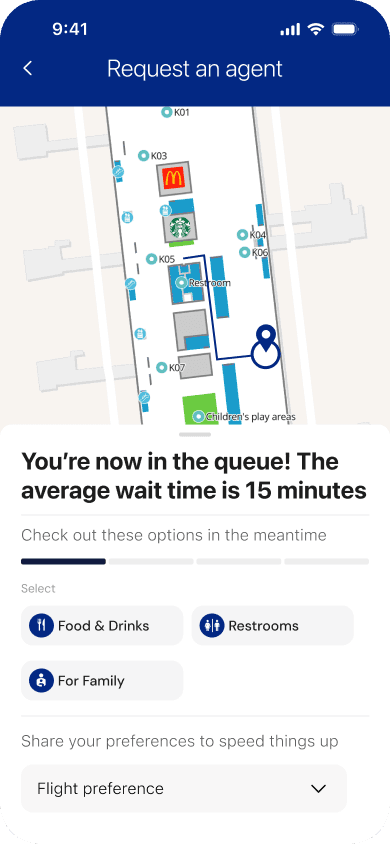
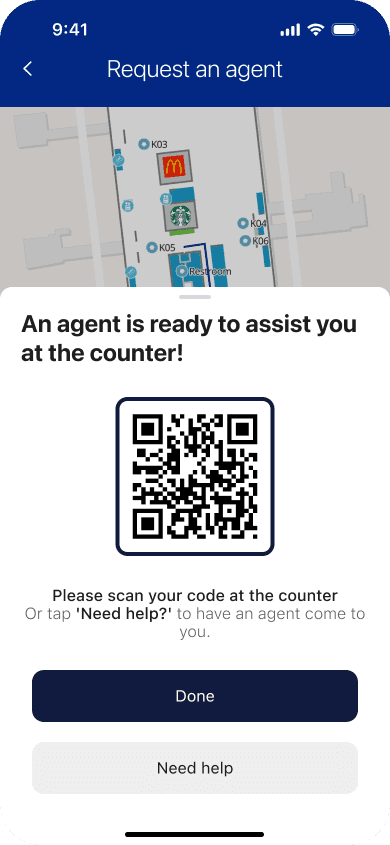
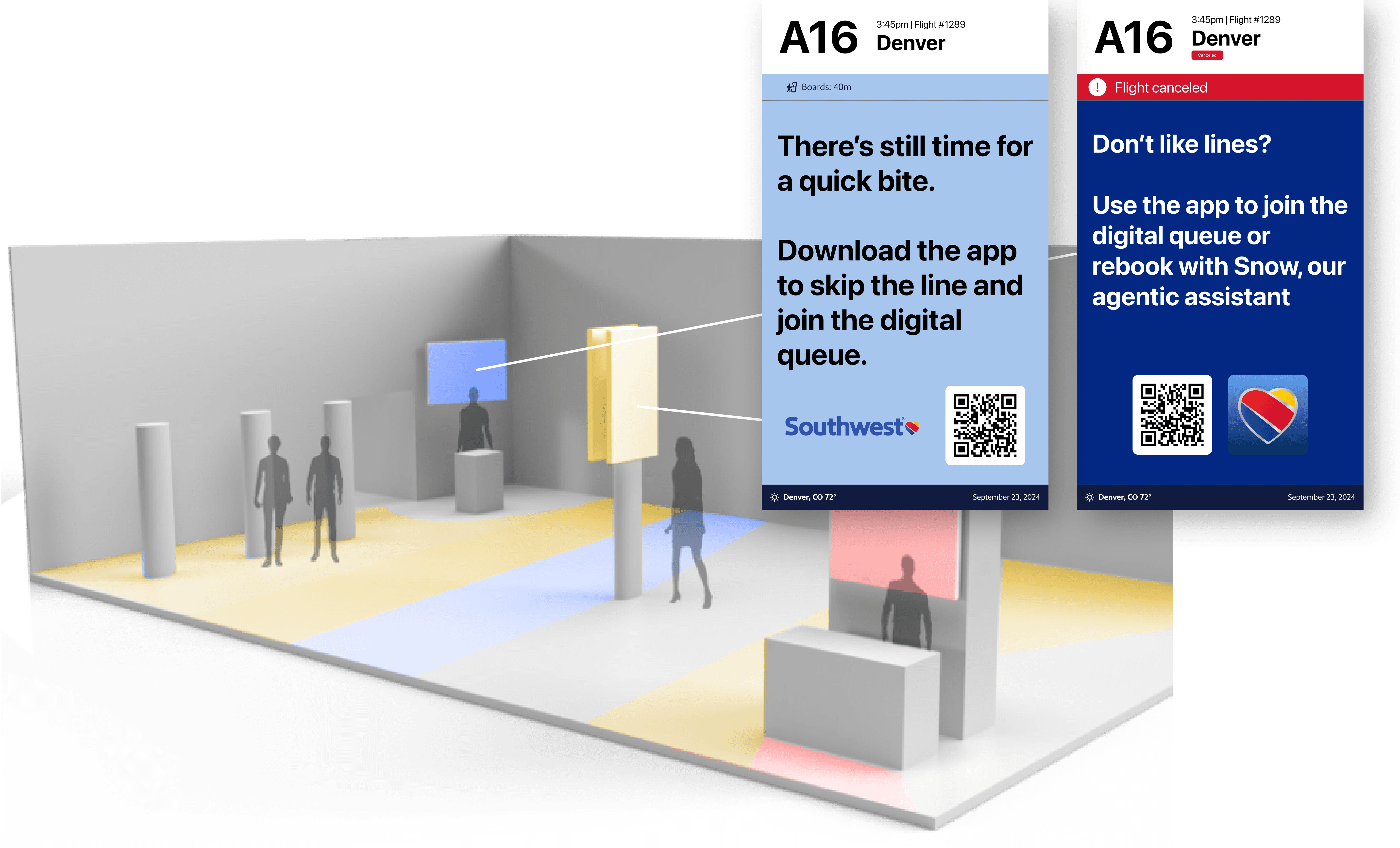
If travelers could queue virtually rather than stand in line, it would reduce stress and smooth operations for everyone.
Provides travelers helpful options while they wait and gives agents smoother workflows.
Requires users to download the app
Support feels reactive not proactive
Early feature screens (scrapped)
Users skipped past onboarding without reading. Once in the queue, they felt lost and unsupported.
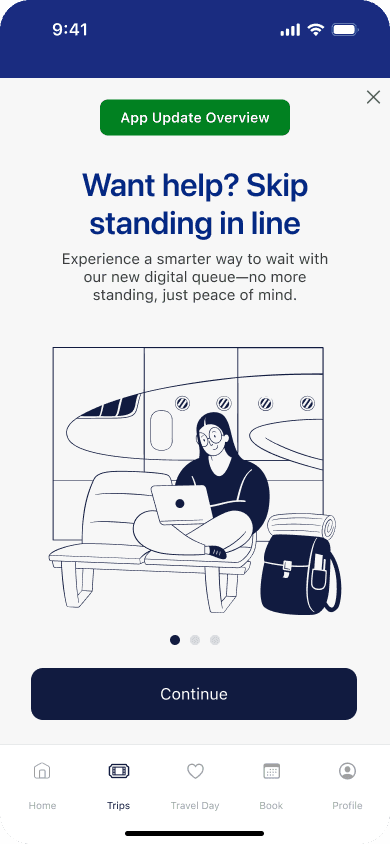
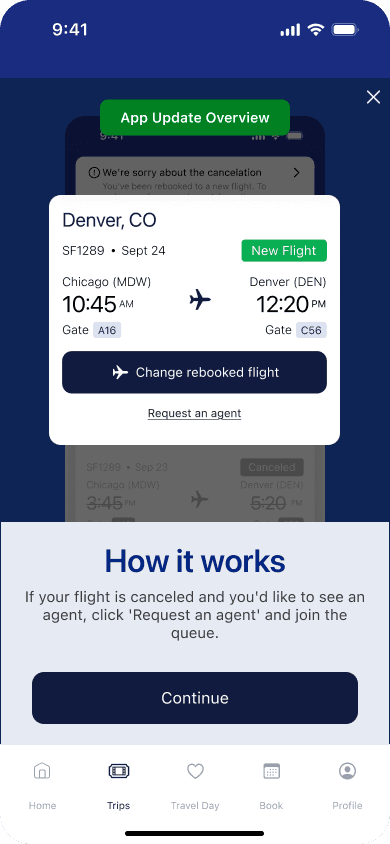
In moments of crisis, users don’t want to be told what to do. They need options shown to them, not explanations.
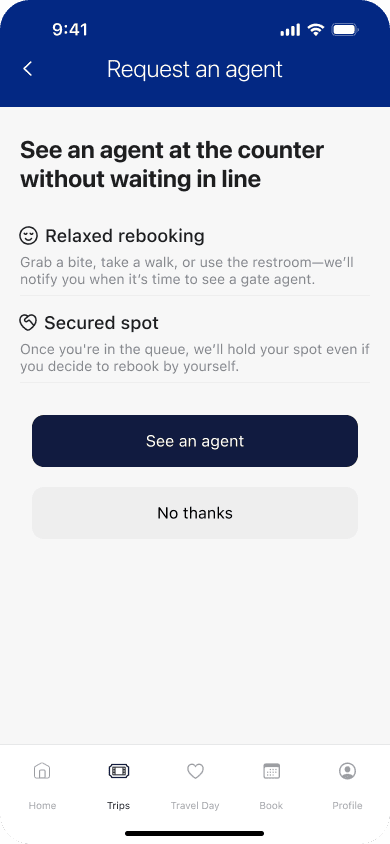
Early onboarding flow (scrapped)
Early onboarding flow — later scrapped.
Abandoning onboarding in favor of organic discovery
One key tradeoff in this project was choosing not to rely on a traditional onboarding flow. While onboarding can be effective in calm, exploratory contexts, flight disruptions place travelers in a high-stress, time-sensitive state where reading explanations adds friction rather than clarity.
By deprioritizing onboarding, I accepted that some system logic would remain implicit. In return, the experience reduces cognitive load and allows travelers to understand Snow through action, not instruction — which better matches their emotional and situational needs during disruptions.
Rethinking support
Instead of telling users when or how to get help, we stepped back to reimagine the entire support experience — leading us to Snow, an AI concierge that guides travelers in the moment, making help feel conversational and intuitive.
Solution
AI-Guided Support
Helps travelers navigate rebooking or connect with an agent through a simple conversational flow.
Contextual Intelligence
Uses trip data to surface helpful suggestions and give agents the context they need.
Native Experience
Feels naturally built into the app so travelers can find and receive help without extra onboarding.
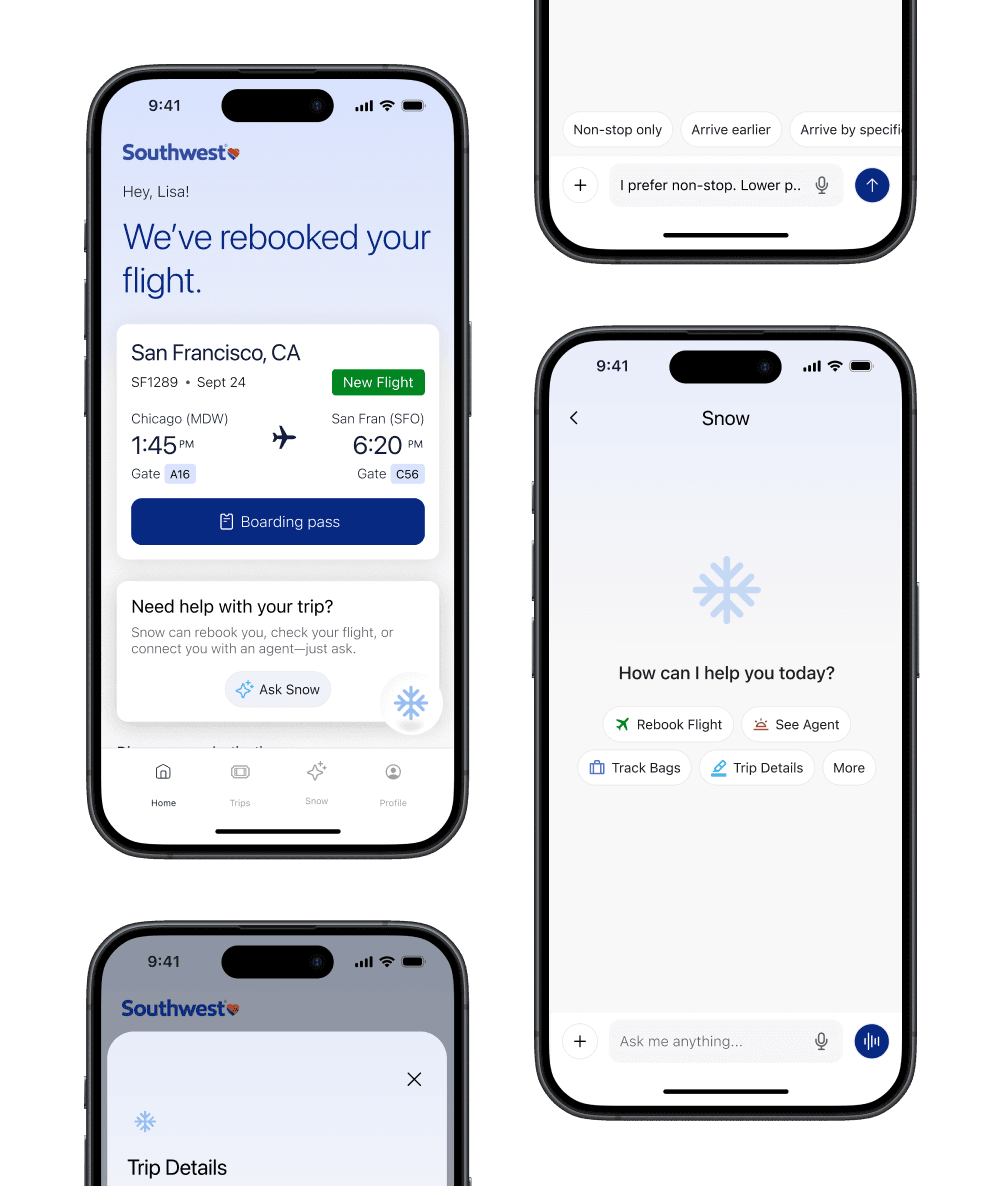
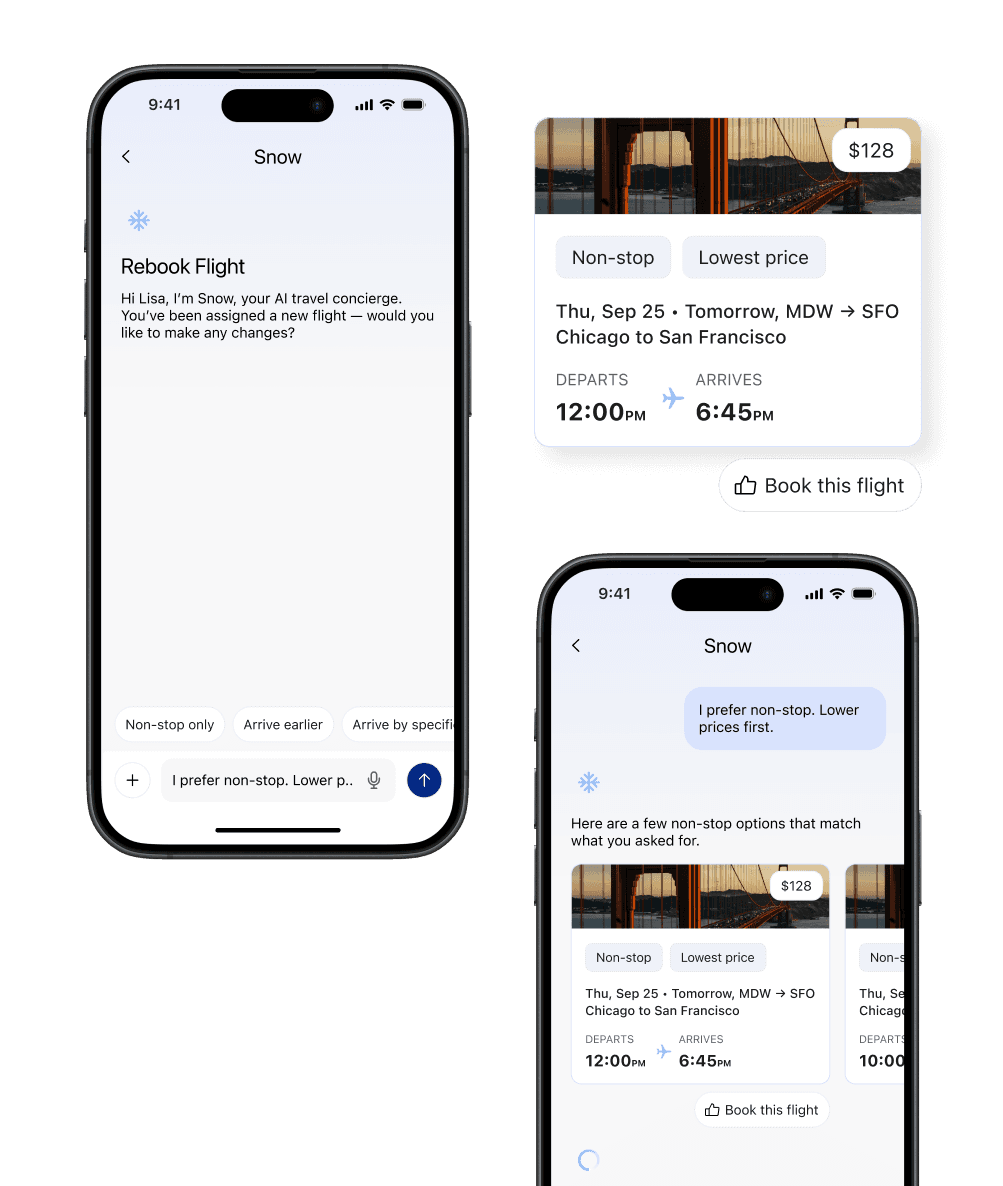
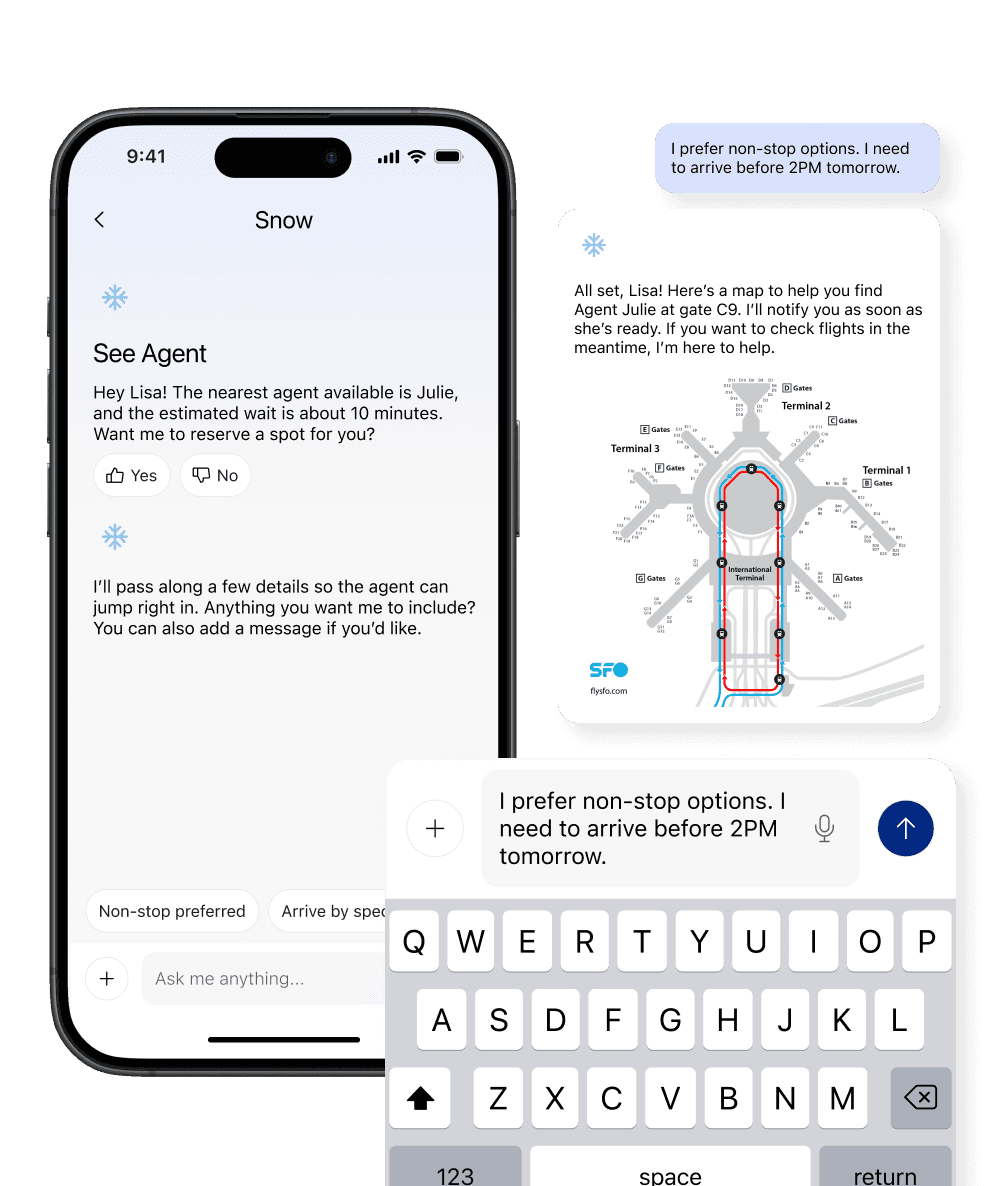
In our research, we learned that travelers seek out agents not because they expect a magic solution, but because talking through a problem helps relieve stress and uncertainty. During disruptions, reassurance matters as much as resolution.
Conversational support isn’t new, but past chatbots relied on scripted responses that often redirected users back to technical support. Advances in AI now enable systems to understand intent, maintain context, and take action on a traveler’s behalf.
Iterations
Conversation Entry & Interaction Models
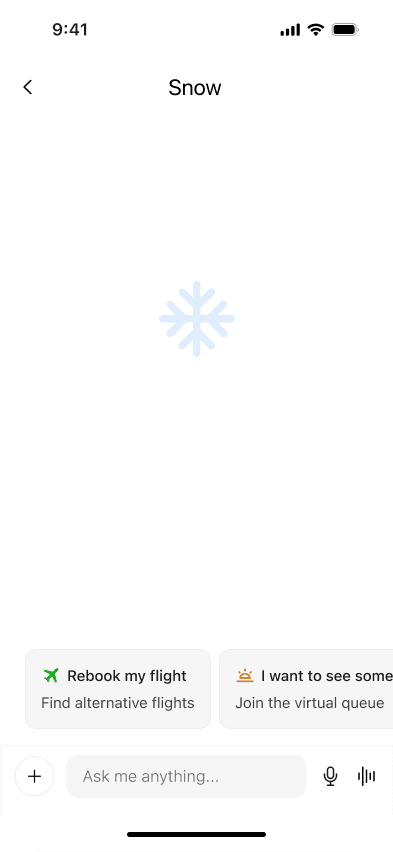
Ver 3
Medium
Thoughts
A blend of 1 and 2 — compact and handy near the search bar. But hidden options make guidance less visible, and clarity suffers. Clean layout, but not my favorite visually.
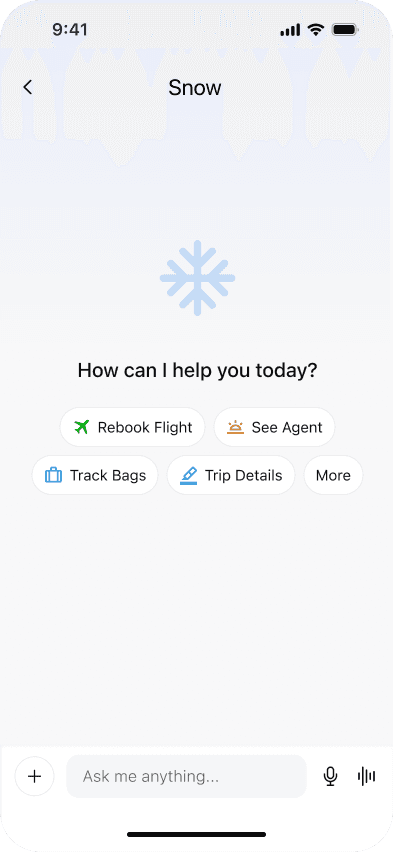
Ver 4
Guidance
Medium-Low
Thoughts
Centered, clearly emphasized options make actions easy to spot. Balanced colors and clean visuals guide attention without clutter. Less informative than the card layout, but very action-oriented.
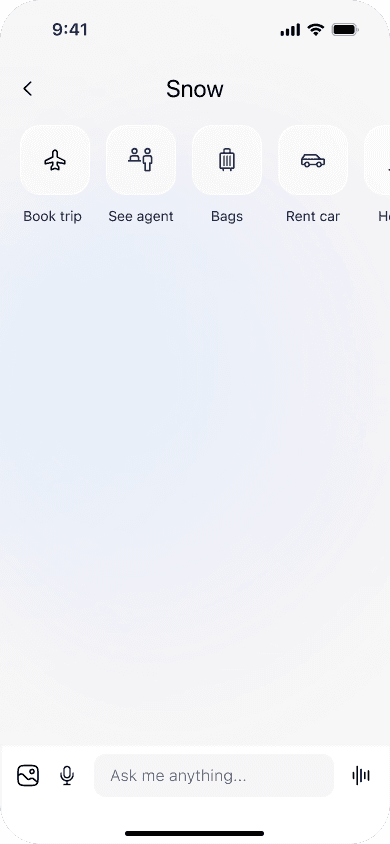
Ver 1
Guidance
Low
Thoughts
Quick-access toolbar keeps cognitive load low and fits naturally into the UI, but most options stay hidden behind scrolling. Provides little information or guidance, making it easy to miss what Snow can do.
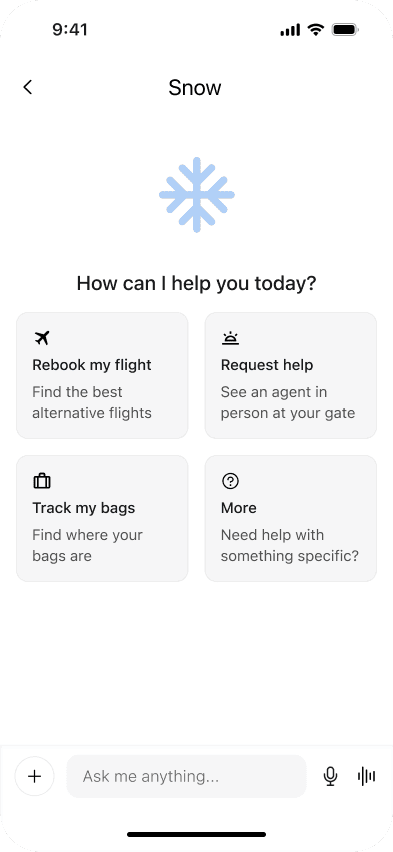
Ver 2
Guidance
Medium
Thoughts
Clear layout makes actions easy to grasp, but the amount of information creates higher cognitive load. Great for first-time users, but feels slower for travelers who want quick help.
Ver 3
Ver 1
Ver 2
Freedom vs. Guidance
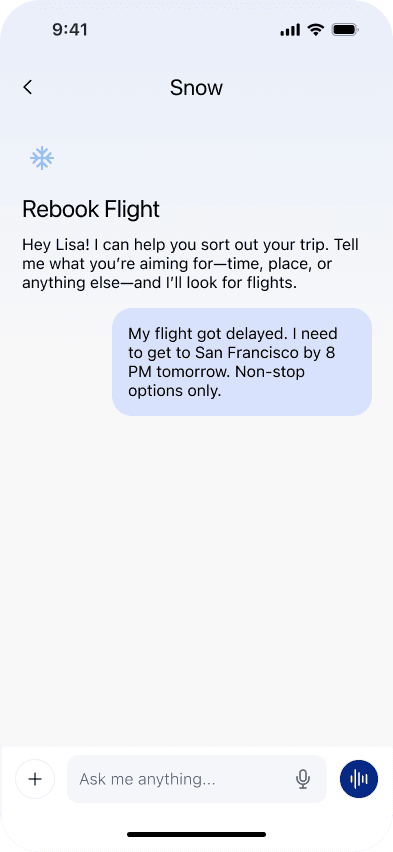
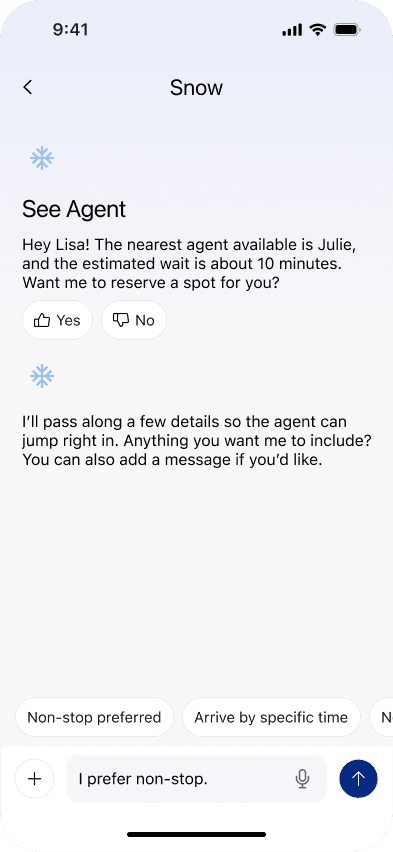
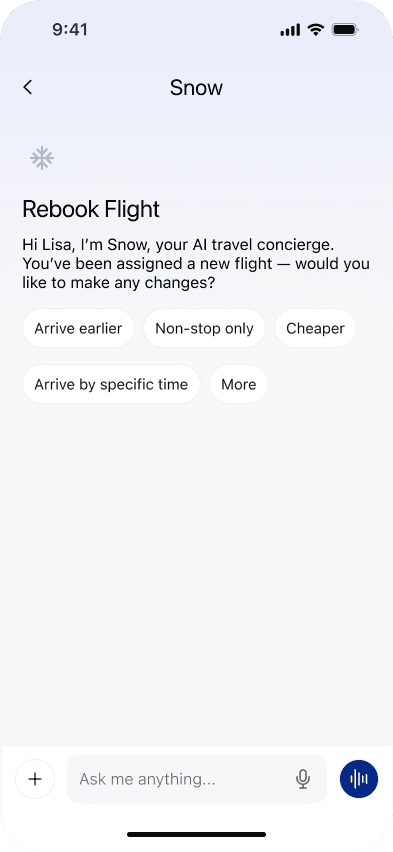
Designing Snow’s conversation experience required balancing two competing needs: providing enough structure to guide travelers during disruptions, while avoiding rigid flows that limit how they express what they need.
Fully freeform input offered flexibility, but often left users unsure how to begin under stress. Highly structured options clarified next steps, but introduced cognitive overload and reduced the feeling of conversational support.
In the final model, I intentionally traded complete clarity and exhaustive option-setting for guided prompts that suggested next steps without prescribing them. This meant some users wouldn’t see every possible path upfront, but it reduced decision fatigue and preserved a sense of agency during high-stress moments
Conclusion
50%
Faster time to get help
Participants reached support about twice as fast when Snow gathered context upfront.
$24.5 m
Estimated savings
Modeled reductions in agent load suggested significant annual savings across major hubs.
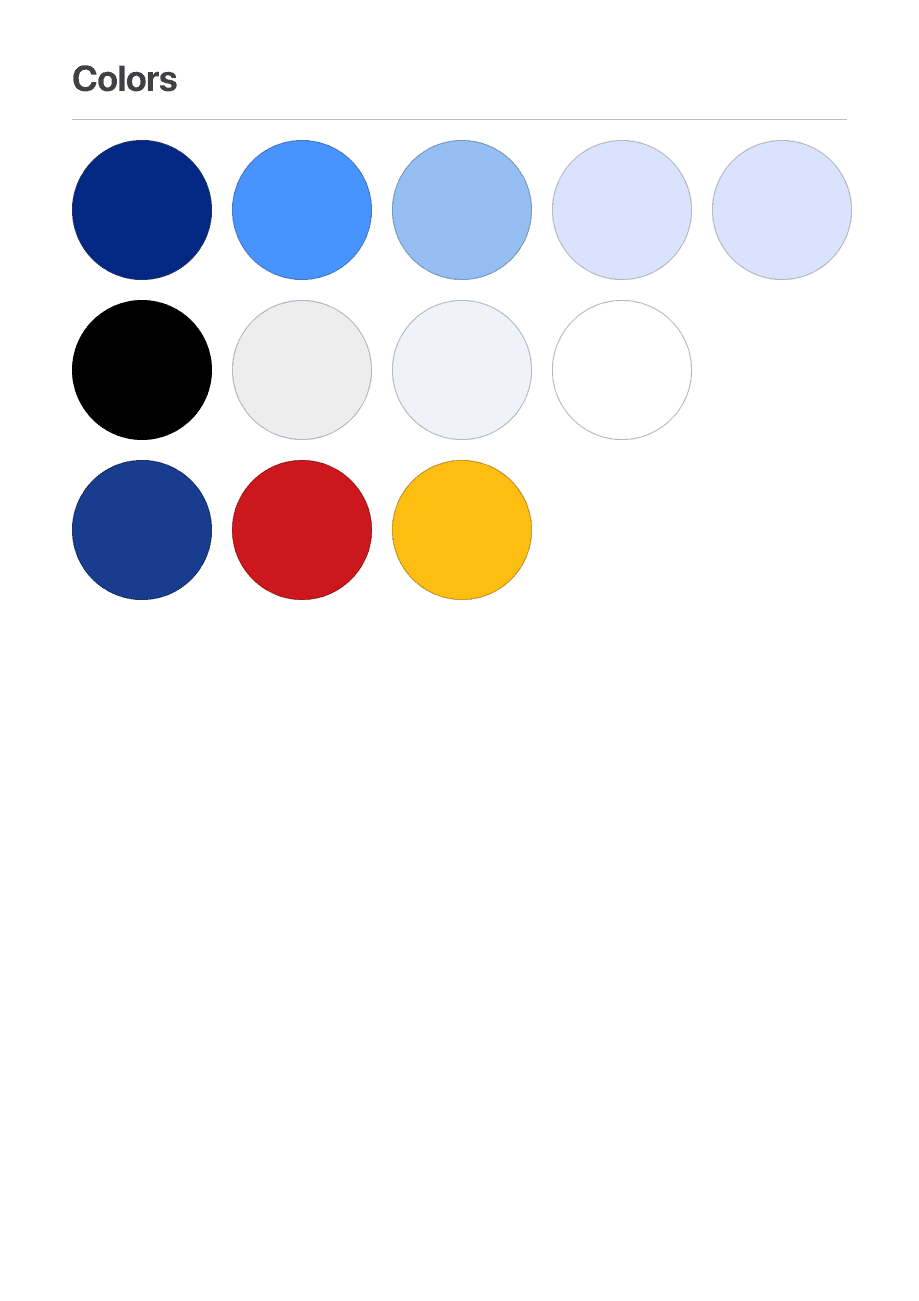
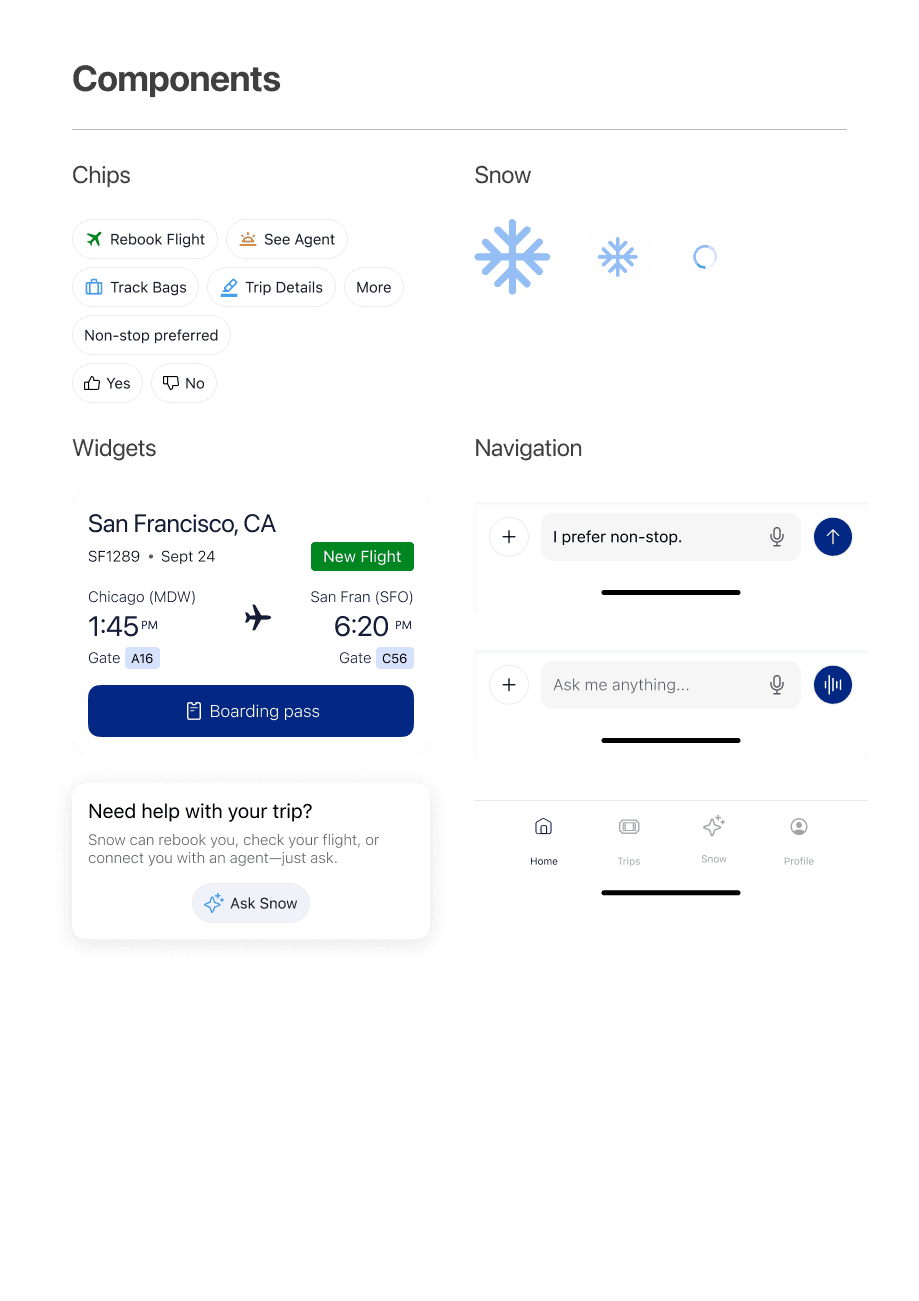
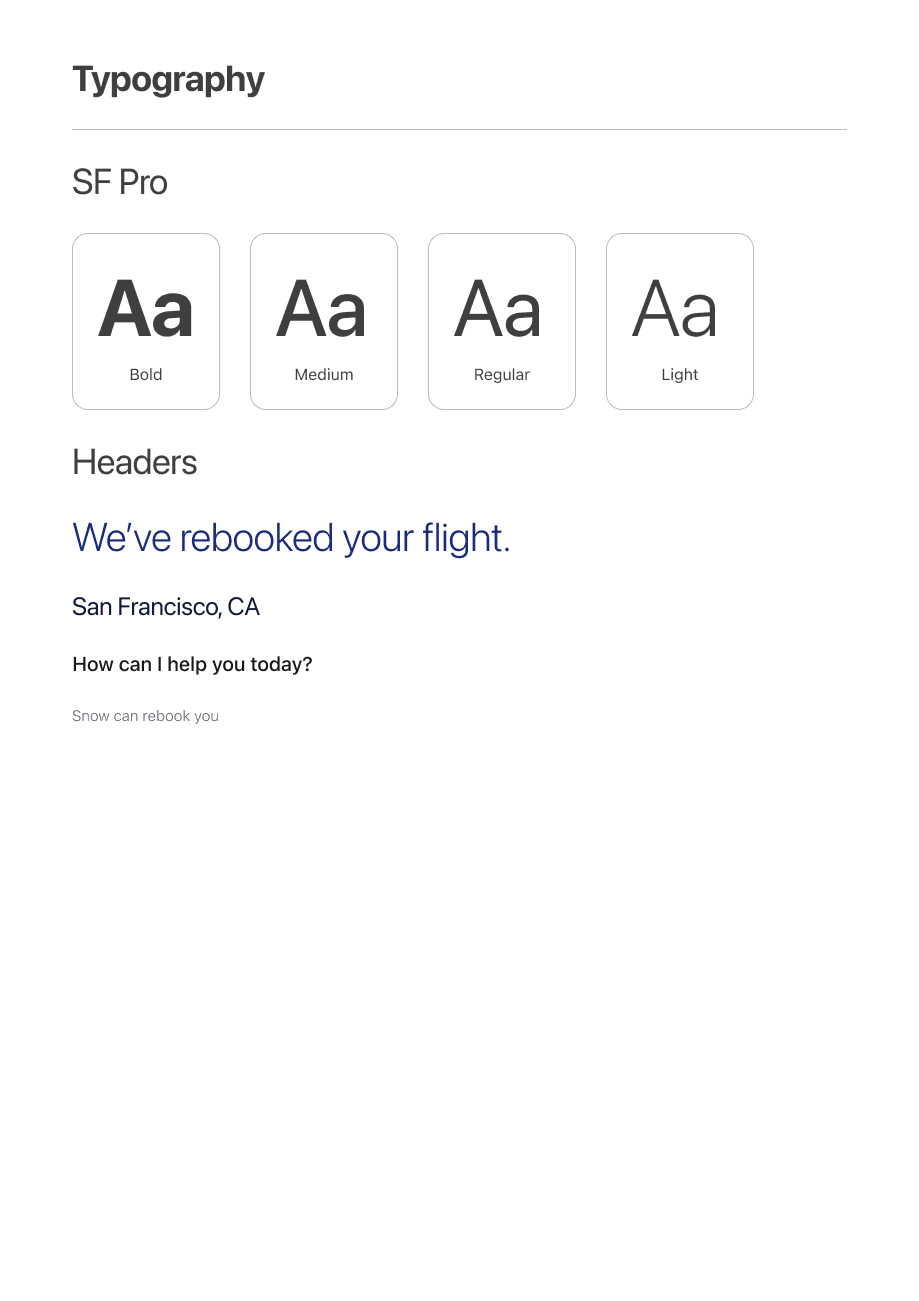
Design System

Reflection
What I learned…
What I'd do differently…
Thank you for flying with us